Reading Your Hand
Your hand changes meaning every turn — what looked great on the mulligan might be dead weight by turn eight, and what looked useless might become the whole game plan.
Start of Play: Assessing Your Mulligan
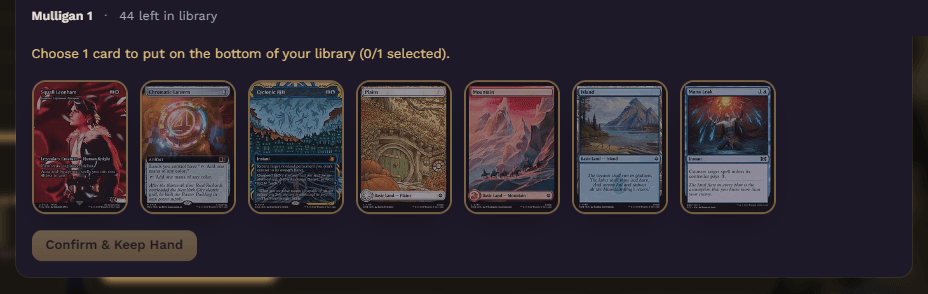
Know the real cost
The London Mulligan deals a fresh seven every time, then bottoms cards equal to how many you've taken. Six costs one card, not a worse hand shape.
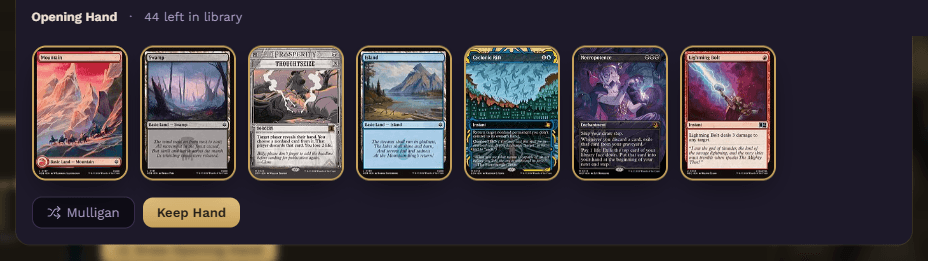
It's not about land count
A hand with the “right” number of lands can still be a mulligan. The real question: can this hand act on time?
Color screw counts too
Three lands that can't cast anything in your hand is the same problem as one land — it just looks better on paper.
Watch the greedy keep
A flashy bomb with no early plays is a trap, not a keep. Card quality isn't the same as hand quality.
Ramp counts as consistency
In Commander, a hand that smooths its own curve is worth more than the same cards would be in a 60-card format.
Ask before you mulligan
Can I survive early? Do I have a real path to winning later? Am I actually likely to end up better off?
Middle of Play: Reading Your Hand as the Game Develops
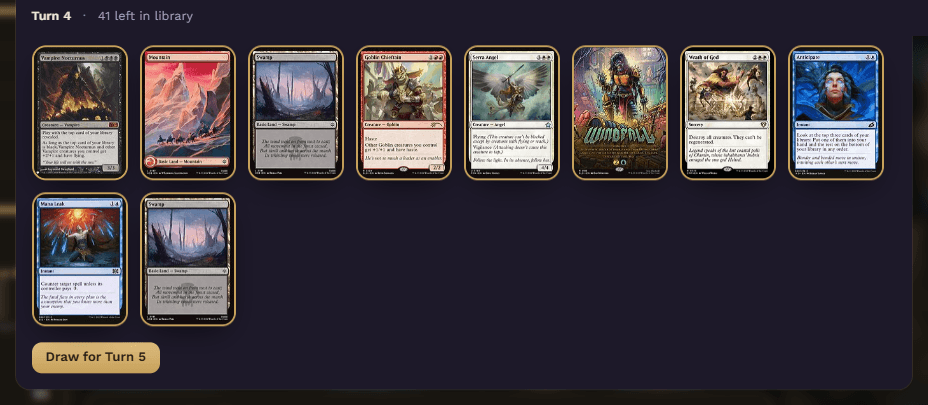
Sequencing is a decision
Play lands in the order that keeps your options open longest. Don't tap out for information you don't need yet.
Update the plan, not just the board
A hand built for offense can need to become defense. Reassess what your hand is for every turn, not just once.
Holding interaction is still work
A removal spell sitting in hand shapes what your opponents are willing to do, even before it's cast.
Read the table, and be read by it
Play around what an opponent's real mana allows — and remember your own plays are telling them something too.
Throughout Play: Ongoing Hand Management
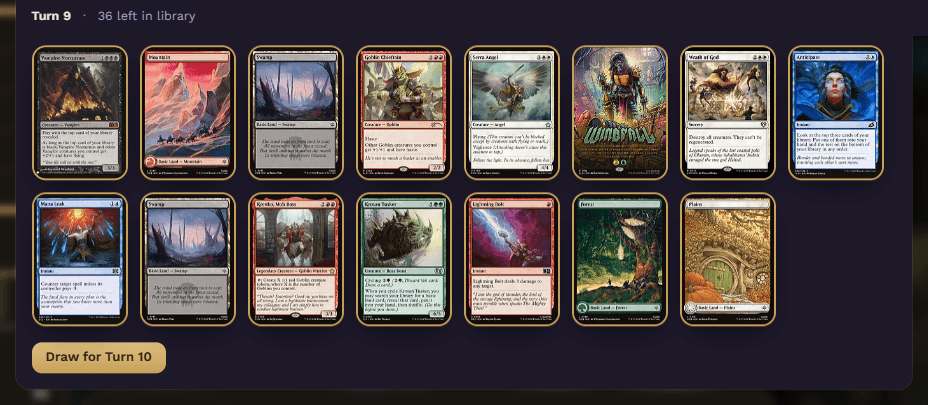
Hand size is a real resource
Card advantage isn't abstract — it's the actual number of cards you and your opponents are holding.
Know your max hand size
Most formats cap you at seven cards at cleanup. Don't let a card go to waste for free.
Recognize when a card goes dead
A removal spell with no target is still costing you a card slot. Reassess relevance regularly, not just once.
Your role can flip
Whether you're attacking or defending is set by the board, not your deck's identity — and it can flip mid-game.
You can represent more than you have
An empty-looking hand can still shape decisions if you've been playing all game like you have something.
Ready to Put This Into Practice?
Open a deck in the Studio and try the Hand Simulator yourself — see how these calls actually play out.
Go to Your Decks